
Did you know? In the United States, something as essential as wearing a helmet—or the ability to ride between lanes—can be perfectly legal in one state and a costly mistake in another. Motorcycle laws by state are more than just fine print; they dictate how, where, and with what protection you ride, sometimes with dramatic differences from California’s bustling highways to Florida’s scenic backroads.
Startling Facts About Motorcycle Laws by State
The patchwork of motorcycle laws across the U.S. can surprise even the most seasoned riders. What keeps you legal in one state might get you ticketed, or even endanger you, in another. For example, helmet laws are only universal in 18 states, leaving the rest with partial requirements or none at all. Lane splitting—the practice of riding between lanes of traffic—is officially legal in California, but explicitly forbidden in many other states, sometimes resulting in severe penalties. Insurance coverage, age requirements, and licensing also vary: in some states, you can earn a motorcycle license at age 14, while others require you to wait until you’re 18 and complete extensive safety courses. These differences matter, not just for staying legal but for staying safe on America’s open roads.
"Did you know that helmet laws and lane splitting regulations vary dramatically from California to Florida?"

What You'll Learn About Motorcycle Laws by State
The core motorcycle law differences across all 50 states
Helmet laws and age requirements by state
Insurance and license regulations for motorcyclists
Lane splitting rules, eye protection, and additional state requirements
Understanding the Basics: Motorcycle Laws by State
To ride safely and legally across the nation, you need to grasp the basics behind motorcycle laws by state. Every state builds its regulations on a few fundamental pillars: helmet usage, licensing, insurance, and special requirements like eye protection or the legality of lane splitting. Some states, like North Carolina, require riders to carry a valid driver’s license with a motorcycle endorsement, while others make wearing a motorcycle helmet mandatory at all times on public roads, regardless of age or experience. Understanding these critical distinctions ensures you’re operating within the law and boosts your own safety—no matter which state line you're crossing.
While understanding the legal landscape is crucial, keeping your motorcycle in top condition is equally important for safe travels. For practical tips on maintaining your bike throughout the year, check out these seasonal bike care secrets every rider should know to ensure your ride is always ready for the road.

State-by-State Breakdown: Major Motorcycle Law Differences
The landscape of motorcycle law in the U.S. is complex, with each state imposing its own standards. Maryland and California, for example, demand universal helmet usage, while Illinois leaves the choice up to the rider. There are also considerable gaps in age requirements—Montana lets teenagers ride motorcycles as young as 15, while others hold firm at 16 or 18. Insurance expectations swing widely, with some states mandating robust minimum coverage for property damage and bodily injury. Lane splitting? That’s largely California’s domain, but Utah and a handful of others are starting to experiment with similar permissions. The following table details the primary areas where these laws diverge the most.
State |
Helmet Law |
Min. Age for License |
Eye Protection |
Insurance Required |
|---|---|---|---|---|
California |
Universal |
16 |
Yes |
Yes |
Florida |
Over 21 (if insured for $10,000+) |
16 |
No |
Conditional* |
Illinois |
None |
16 |
No |
Yes |
New York |
Universal |
16 |
Yes |
Yes |
Texas |
Over 21 (if MSF course and insured) |
16 |
No |
Yes |
*Florida does not require proof of insurance to register, but liability coverage is needed if you’re in a crash.
Helmet law variations
Motorcycle license regulations
Insurance requirements
Eye protection statutes
Lane splitting legality
Helmet Laws: A State-by-State Overview
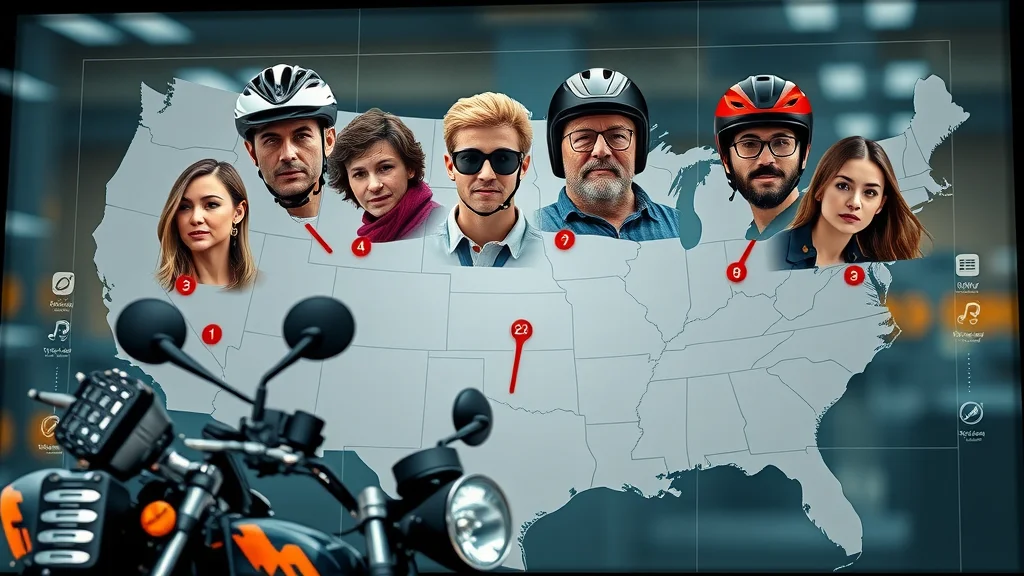
One of the most visible and heated debates concerns helmet laws. Eighteen states, plus the District of Columbia, require all motorcycle riders to wear a helmet at all times on public roads. These “universal” helmet law states include California, New York, and Maryland, as well as North Carolina. Most other states implement partial helmet laws, where requirements depend on a rider’s age (usually anyone under 18 or 21) or their insurance status. A select few—like Illinois, Iowa, and New Hampshire—have no helmet requirements at all, leaving the decision completely up to the motorcycle rider. Knowing your state’s stance is critical since violating helmet law can lead to hefty fines or affect your insurance in a motorcycle accident.
Universal helmet laws: Required for all riders.
Partial helmet laws: Typically apply by age requirement (most often under 18 or 21) or insurance coverage.
No helmet requirement states: Only a handful, most notably Illinois and Iowa.
"States like California enforce strict helmet laws for all riders, while Illinois imposes no helmet law at all."

Motorcycle License and Age Requirements by State
Securing the right motorcycle license is not always straightforward. Across the nation, states set their own age requirements and pathway to becoming a legal motorcycle operator. For example, most states require a person to be at least 16 for a motorcycle endorsement, but a few set the bar lower or higher. Graduated licensing programs—where young riders must first get a permit, complete supervised hours, and pass written and on-road tests—are also increasingly common. Many states require completion of a certified motorcycle safety course (like the MSF Basic RiderCourse) before a license or endorsement is issued. These training requirements aren’t just bureaucratic hurdles; they dramatically improve safety outcomes by ensuring new riders learn essential riding practice skills.
Minimum age for motorcycle endorsement: Ranges from 14 (some states) to 18.
Graduated licensing programs: Stepwise process to full privileges.
Safety course mandates: Often required for riders under 21, but increasingly for all applicants.
"In Texas, riders can secure a motorcycle license (Class M) at age 16, but must complete a certified safety course."

Motorcycle Insurance Laws by State
Motorcycle insurance requirements are another essential piece of the puzzle. While most states require motorcycle operators to carry at least minimum liability insurance to cover property damage or injury caused to others, the specific minimum coverage amounts can vary dramatically. Some states mandate additional coverage, such as uninsured motorist protection, and impose steep penalties for riding uninsured—including fines, license suspension, or impounding your motorcycle. Oddly, a small handful of states, like Florida, do not require insurance to register a motorcycle—although you’ll be directly responsible for any costs if you are at fault in a motorcycle accident. Always check state minimums before riding, as insurance rules are strictly enforced during traffic stops or after an accident.
Liability insurance minimums: Required in most states for motorcycles on public roads.
Uninsured motorist coverage rules: Enforced in some states for additional protection.
Penalties for riding uninsured: Steep fines, license revocation, and even vehicle impound.
"Florida does not require traditional motorcycle insurance to register a motorcycle, yet liability coverage is mandatory if you are involved in an accident."

Eye Protection, Lane Splitting, and Additional State Requirements
Beyond helmets and license plates, states also diverge in eye protection mandates, the legality of lane splitting, and a mix of lesser-known statutes. Dozens of states require motorcycle operators and their passengers to wear shatterproof, government-approved goggles or a face shield unless the bike is equipped with a windshield. Lane splitting, meanwhile, is legal only in California; other states either do not address the issue, limit it under certain conditions (e.g., Utah’s “lane filtering”), or outright ban it. Additional requirements range from noise limits on exhaust pipes, rules for carrying passengers, to statutes about handlebar height or even footwear. The complexity of these rules means you must always research local laws before crossing state lines.
Eye protection mandates: Most states require if no windshield is present.
Lane splitting: Legal in California, restricted or banned elsewhere.
Noise limits, passenger laws, and other uncommon statutes: Varies by jurisdiction.
"Only California officially allows lane splitting, while several states explicitly prohibit it."

Motorcycle Accident Laws: Reporting and Legal Obligations
If you’re involved in a motorcycle accident, state laws spell out exactly how you must report, document, and follow up. Typically, accidents that result in injury, death, or a certain amount of property damage (often $500 or more) require immediate reporting to local police or highway patrol. Most states impose strict time limits for informing your insurance provider; failing to notify in time could jeopardize your claim. Legal responsibility for damages is also a state-specific issue, with different rules around fault, liability, and the steps you must take to protect your rights. It’s wise to consult with a qualified attorney familiar with motorcycle law in the jurisdiction where the accident occurred—especially if you face potential lawsuits or criminal charges as a motorcycle operator.
How to file an accident report: Usually within 24-72 hours of the incident.
Time limits for insurance notification: Check your policy and state law, but generally within a few days.
Legal representation and state-specific liability rules: Seek local expertise, as laws around fault and compensation can vary widely.

In this engaging video, experts and law enforcement officers break down the nuances of helmet laws, lane splitting restrictions, motorcycle licensing, and insurance rules nationwide. See animated maps, on-location interviews, and real-world biking scenarios with expert narration and subtitles for accessibility.
People Also Ask: What state has the strictest motorcycle laws?
States like New York and California are often recognized for the strictest motorcycle laws by state. They mandate universal helmet usage, enforce stringent licensing and insurance requirements, and have robust enforcement on public roads. New York also places strict rules on eye protection and imposes heavy penalties for violations, making it one of the toughest environments for motorcycle operators.

People Also Ask: What does 2 fingers down mean to bikers?
The “2 fingers down” gesture is a friendly salute between motorcycle riders, often symbolizing respect, camaraderie, and a shared emphasis on motorcycle safety. Flashing two fingers down as you pass another rider means “keep your tires on the road” and “ride safe”—a simple yet meaningful tradition across America’s open roads. It’s not tied to any specific motorcycle law, but to the unwritten rules of biker culture.

People Also Ask: In what states can cops not chase motorcycles?
There’s no state where law enforcement is categorically forbidden from pursuing motorcycles, but many states and cities—especially in urban centers—have specific policies limiting high-speed chases for safety reasons. For instance, some police departments may restrict pursuits if the motorcycle operator is riding recklessly or if continuing would endanger the public. Always assume you are subject to chase and pull over when signaled by law enforcement.
People Also Ask: What states require a motorcycle license?
All 50 states require a motorcycle license or endorsement to legally operate a motorcycle on public roads. Requirements and processes differ, but at minimum, expect a written test and skills assessment. Riding without the proper license can result in fines, impoundment, or even criminal charges, so be sure you meet your state’s specifications before hitting the road.
FAQs About Motorcycle Laws by State
Are motorcycle laws by state enforced uniformly?
No. Enforcement varies based on local priorities, law interpretation, and available resources. Always assume laws are strictly enforced, especially when riding in unfamiliar areas.How often do motorcycle laws change?
State legislatures can update motorcycle laws every session, so changes may happen yearly. Keep up-to-date on laws before each riding season for safety and compliance.Can I ride with an out-of-state motorcycle license?
Yes, your valid out-of-state motorcycle endorsement is generally accepted for visitors, but you must follow all local laws while riding on public roads.What are the penalties for violating helmet laws?
Penalties range from small fines to license points or even criminal charges for repeat offenses. Insurance claims after an accident may also be affected by non-compliance.Do motorcycle laws by state apply to scooters and mopeds?
Often, yes. Many states define “motor-driven cycles,” which include scooters and mopeds, and apply similar (sometimes slightly relaxed) helmet, licensing, and insurance rules.
Key Takeaways on Motorcycle Laws by State
Motorcycle laws by state are highly variable and impact every aspect of riding.
Always research and obey specific state requirements before traveling.
Insurance, helmet, and licensing rules are the most common areas of difference.
Legal updates mean riders must stay informed about current motorcycle regulations.
Conclusion: Staying Safe and Legal on the Road
Traveling across state lines as a motorcycle rider offers freedom but demands responsibility—know the motorcycle laws by state, stay legal, and put safety first every mile of the way.
Understanding the legal landscape is just one part of a truly safe and enjoyable riding experience. To elevate your journey even further, consider how proactive maintenance and seasonal care can keep your motorcycle performing at its best, no matter where the road takes you. Explore our expert guide on seasonal bike care strategies to discover essential routines and advanced tips that help you ride with confidence year-round. By combining legal awareness with smart bike care, you’ll be ready for every adventure—prepared, protected, and always ahead of the curve.

Get Personalized Guidance: Call Nasty Performance Motorcycle Shop Today: 847-458-4858
If you’re unsure about your state’s specific laws or want expert help preparing for your next ride, call Nasty Performance Motorcycle Shop today at 847-458-4858 for personalized, up-to-date advice and support!



Write A Comment