
Did you know the majority of group ride accidents don’t happen because of high speeds, but rather due to a lack of preparation and miscommunication? When you’re sharing the open road with fellow motorcycle enthusiasts, knowing how to prepare for group riding safety can mean the difference between an unforgettable group motorcycle ride and a costly mistake. This in-depth guide will arm you with the knowledge and practical steps needed to keep every group ride safe, organized, and enjoyable—so your entire group can truly ride safe and enjoy the journey.
A Surprising Truth About Group Riding Safety
"Most motorcycle accidents in group rides stem from poor communication and unpreparedness, not reckless speed."
While it’s easy to imagine that group riding injuries are the result of thrill-seeking or excessive speed, the reality is far more mundane—and preventable. Research and rider experience alike reveal that the most frequent causes of group ride mishaps are a lack of coordination, overlooked safety checks, and the absence of standardized protocols. In most cases, it’s not the open road that poses the biggest threat, but what happens before and during the ride when communication breaks down and established roles or signals are ignored. That’s why understanding how to prepare for group riding safety is vital whether you’re a novice or an experienced rider.
Adopting best practices for motorcycle group riding isn’t just a good idea—it’s essential. By clarifying group ride roles, agreeing on hand signals, and following proven strategies, you can turn potential hazards into manageable routines. So, whether you’re gearing up for your next big group motorcycle adventure or organizing your regular monthly group rides, investing in preparation today will keep everyone safer tomorrow.
What You’ll Learn About How to Prepare for Group Riding Safety
- Key principles for safe group motorcycle riding
- Essential hand signals every group rider must know
- The critical roles of lead and sweep riders
- How to communicate and position riders for safety
- Common costly mistakes—and how to avoid them
By the end of this comprehensive article, you’ll have practical insights and step-by-step instructions to confidently approach group riding—whether you’re joining a local motorcycle group or leading a group ride on a new scenic route. We’ll cover everything from effective ride prep to the most important hand signals, and even break down why group structure makes all the difference on the open road.
Understanding Group Riding: The Foundation of How to Prepare for Group Riding Safety
Why Group Ride Preparation Matters
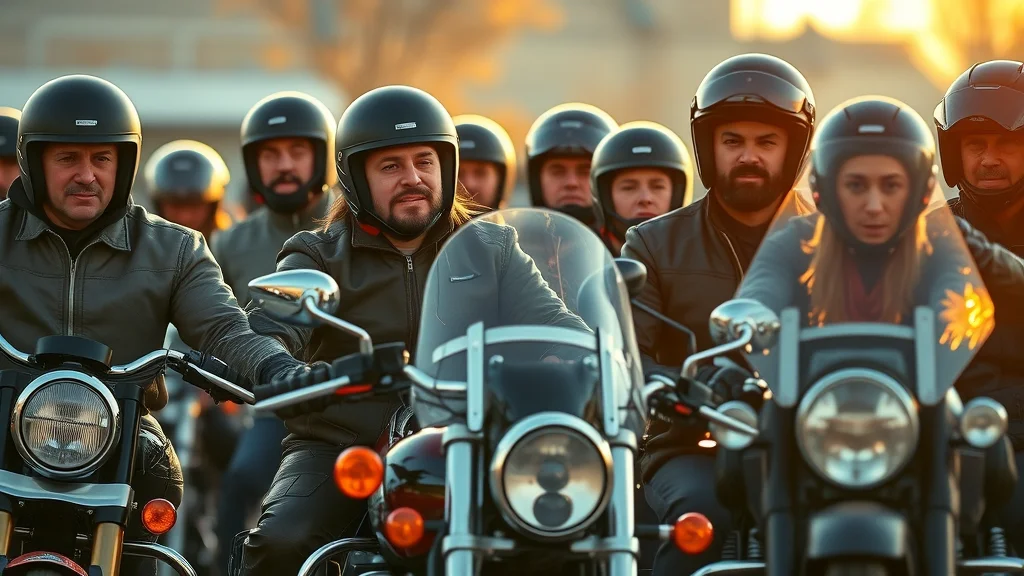
Before any group motorcycle ride hits the road, preparation sets the tone for the entire experience. Skipping crucial steps—such as assigning a lead rider or discussing emergency hand signals—can put the entire group at unnecessary risk. In group riding, every rider depends on the readiness of the rest of the group, making pre-ride planning just as important as the ride itself.
Imagine riding in a group where no one knows the route, the fuel stop locations, or what hand signals mean. It leads to confusion, improper spacing, and even potential road hazards that experienced riders might miss. Knowing how to prepare for group riding safety is about more than just looking out for yourself—it's about ensuring the collective safety and enjoyment of everyone, whether they’re at the front, in the middle, or at the back of the group.
While group riding safety relies on communication and structure, it’s equally important to ensure your motorcycle is in top condition before every ride. For a deeper dive into keeping your bike ready for any season, check out these seasonal bike care secrets every rider must know—a resource that complements your group ride preparation with essential maintenance tips.
Defining a Group Motorcycle Ride and Essential Safety Principles
A group ride is any motorcycle ride where multiple riders travel together, following agreed-upon protocols. The foundational principle of group motorcycling is clear communication—before, during, and after the ride. This includes establishing a procedure in place for route changes, traffic conditions, and responding to road hazards.
Essential safety principles for motorcycle group riding also include maintaining proper formations, respecting traffic lights, and adapting to road surfaces as a unit. Every group ride should be built around mutual trust, visible signals, and respect for the skill levels of every rider in your group. Mastering group riding safety isn’t a one-time event; it’s an ongoing commitment that protects the entire group from avoidable risks.
Step-By-Step Guide: How to Prepare for Group Riding Safety
-
Determine your group size and experience levels:
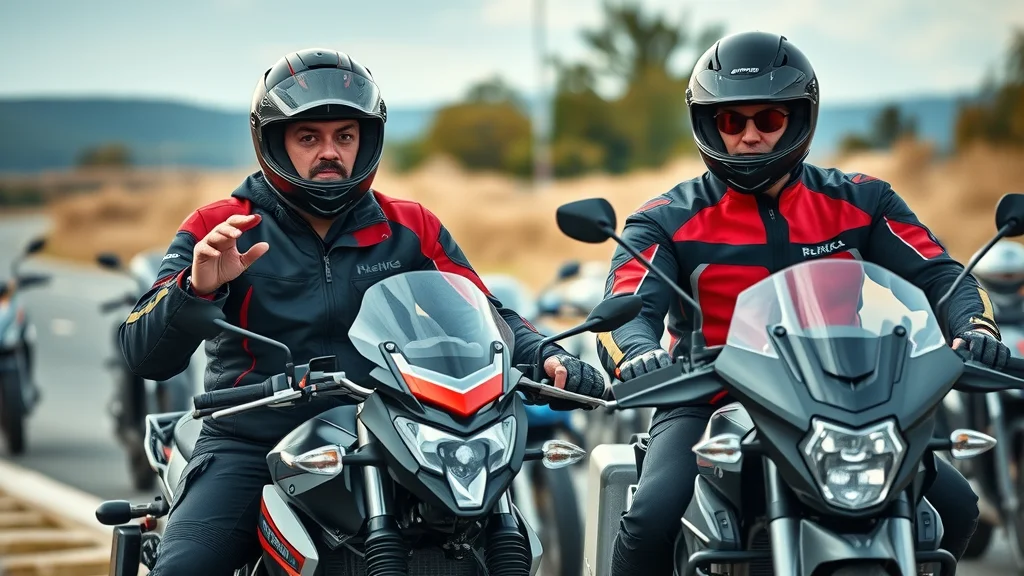
Before scheduling your motorcycle group ride, assess how many riders will join and the skill range within your group. Larger groups often require more structure and can benefit from dividing into smaller sub-groups based on riding experience. Experienced riders can act as mentors, offering advice during ride prep and helping less experienced participants learn protocols.
-
Assign lead and sweep riders for your group ride:
Appointing a lead rider (to set the pace) and a sweep rider (to monitor the back of the group) is essential for managing traffic conditions, ensuring clear communication, and responding quickly to unexpected situations. These roles anchor the group, provide structure, and serve as the primary contacts throughout the motorcycle ride.
-
Plan your motorcycle group riding route and stops:
Map out your entire route, including stops for fuel, rest, and food. Communicate these planned fuel stops and breaks in advance so nobody is surprised and everyone stays together. Good ride prep means selecting safe meeting points and alternate paths in case of a road hazard or detour, ensuring a smooth and stress-free journey.
-
Perform pre-ride bike and gear checks:
Safety starts with equipment. Every rider should check their motorcycle, brakes, tires, and lights—plus inspect their personal gear and helmet. It’s a good idea to review any recent repairs, and experienced riders should be available to assist newcomers during this process. These checks reduce the risk of breakdowns or preventable emergencies during the group ride.
-
Discuss and agree on group riding protocols:
Before leaving, hold a brief meeting to outline hand signals, lead and sweep duties, expected formations, and how to respond to emergencies. Agreeing on group protocol keeps every group motorcycle ride running smoothly even as traffic conditions or road surfaces change.
Hand Signals and Communication: How to Prepare for Group Riding Safety
| Description | Visual | Meaning |
|---|---|---|
| Left Turn | Left arm extended straight out | Indicates the group will turn left; all riders prepare to follow. |
| Right Turn | Left arm bent upward at 90°, hand up | Signals a right turn is coming up for the group. |
| Stop | Left arm down, palm open | Warns the group to stop—usually for a light, stop sign, or hazard. |
| Single File | Left hand up, index finger pointing up | Switch to a single-file formation, often for narrow roads or hazards. |
| Staggered Formation | Left hand up, two fingers extended upward | Move back into a safe staggered formation after single file. |
| Hazard in Road | Point directly at the road hazard (using left or right foot/hand) | Alerts group to avoid a pothole, debris, or slick patch ahead. |
Why Clear Hand Signal Use Prevents Group Riding Incidents
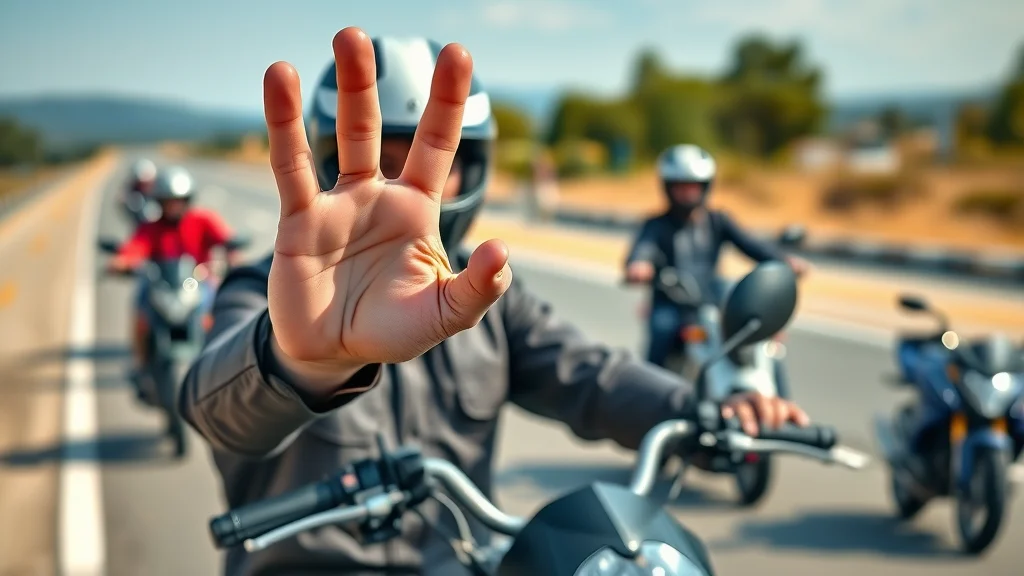
Group riding relies heavily on non-verbal communication, especially when wind noise and helmets make speaking impossible. The timely use of hand signals is the backbone of safe group rides, ensuring that information about traffic lights, hazards, or route changes reaches every rider quickly. Without clear signals, the group risks sudden stops or misinterpretation—leading to collisions or separation.
Practicing hand signal communication during ride prep helps reinforce memory and group awareness. Whether you’re the lead rider announcing a fuel stop or the sweep rider reporting a road hazard, synchronized signals are a fundamental tool for a safe and enjoyable group motorcycle ride. Remember, consistency matters: everyone in the group should recognize and agree on what each hand signal means before the engines start.
Top Hand Signals Every Group Motorcycle Rider Must Use
To make all the difference during your next group ride, ensure every rider is fluent in a core set of hand signals: left turn, right turn, stop, hazard, single file, staggered formation, and signal for slowing down. These cover the essential situations encountered in a typical group motorcycle outing. Regularly review signals before each ride—it’s a simple step that eliminates confusion and keeps the entire group moving as a unit.
A good idea is to designate the lead and sweep riders as signal initiators. They’ll pass signals forward and backward along the line, so even riders in the back of the group receive timely warnings. When everyone is attentive and responsive, hand signals become the glue that holds a safe group ride together.
Demonstrating Hand Signals and Proper Communication in Group Motorcycle RidingProper Riding Formations: The Backbone of Group Riding Safety
Staggered vs. Single File: Choosing the Right Formation for Group Ride Safety
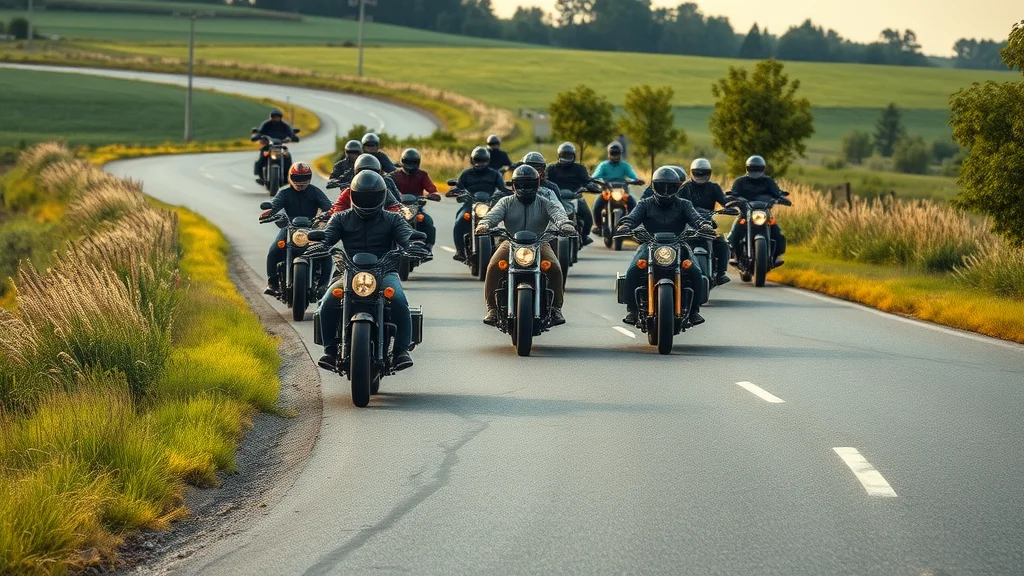
Group riding safety hinges on riding in the correct formation for the road and traffic conditions. The standard staggered formation allows for maximum visibility and safety among group riders—each motorcycle is offset from the one ahead, creating safe spacing while maintaining close communication. On wider, multi-lane roads with consistent traffic flow, staggered formation is the best option for most groups.
In contrast, single file is required on narrow roads, twisty sections, or whenever road hazards reduce available space. By swiftly switching from staggered to single file (using the designated hand signal), the group adapts to changing conditions and protects riders from sudden obstacles or sharp curves. Understanding when and why to use each formation is a core part of how to prepare for group riding safety and ensures every rider in your group enjoys a safe group ride.
Maintaining Safe Distances During Group Motorcycle Rides
Proper distance between motorcycles ensures that riders have enough reaction time in case of sudden stops or road surface changes. In staggered formation, maintain at least one second of following distance from the bike directly ahead and two seconds from the motorcycle directly in line. This prevents pileups and gives everyone room to maneuver while still keeping the group together.
In single-file situations, space out even further—especially when navigating road hazards or unpredictable traffic conditions. Remind every rider in your group of these spacing rules at each pre-ride meeting. Spacing isn’t just about safety; it also reduces stress, keeps everyone visible in mirrors, and lets the lead rider and sweep manage the group more efficiently.
Lead and Sweep Roles: How Leadership Anchors Group Riding Safety
Responsibilities of Lead Riders
The lead rider sets the tone for every group ride. Their responsibilities go far beyond simply being first; they monitor traffic, adjust speed, communicate with hand signals, and signal stops or changes in formation to the rest of the group. The lead is also in charge of navigating the route, anticipating road hazards, and supporting less experienced riders by riding predictably and patiently.
A good lead rider stays aware of the group’s position, road surface changes, and keeps in regular contact with the sweep rider via signals or radio. Before departure, the lead should review the ride plan with the entire group—a procedure in place is what makes all the difference. The lead rider’s clear vision and calm judgment anchor safe and effective group rides.
Duties of Sweep Riders in Group Riding
The sweep rider—sometimes called the tail—rides at the back of the group to keep everyone in check. Their main duty is to ensure no rider is left behind during the motorcycle ride. If a breakdown or emergency occurs, the sweep helps coordinate assistance and communicates with the lead and rest of the group.
An experienced sweep rider is invaluable, especially in mixed-experience groups. They’re responsible for watching for stragglers, reminding the group about proper hand signals, and keeping an eye out for changes in the back of the group that might not be visible to the lead. Whether handling a flat tire at the back of the group or ensuring every rider exits at a fuel stop, a diligent sweep keeps the entire group accountable and safe.
Common Mistakes and How to Avoid Group Ride Safety Issues
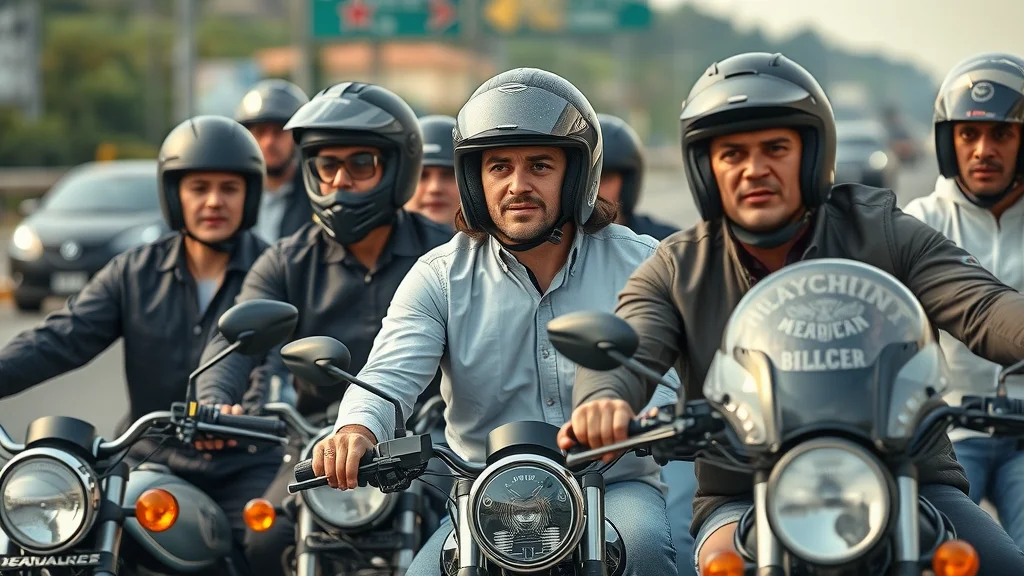
- Skipping the pre-ride meeting
- Inconsistent communication using hand signals
- Failing to consider different skill levels in the group
- Improper spacing between motorcycles
- Ignoring the lead and sweep structure
These common mistakes all have one thing in common: they disrupt unity and create openings for confusion, accidents, or costly errors. The most effective way to avoid group ride safety issues is to establish a group structure and stick to it. Hold a mandatory pre-ride meeting to go over the route, hand signals, the roles of lead and sweep, and the importance of formation and spacing.
Be attentive to the skill level of every rider in your group. Place less experienced riders directly behind the lead rider (where conditions are easiest), and communicate all turns, stops, and hazards clearly. Keep a flexible attitude—changing formations or adjusting pace to keep the group together is a smart, safe group ride strategy.
FAQs on How to Prepare for Group Riding Safety
What does 2 fingers down mean to bikers?
Answer: Explanation of the two-finger gesture as a greeting and sign of rider acknowledgement, benefiting group riding awareness.
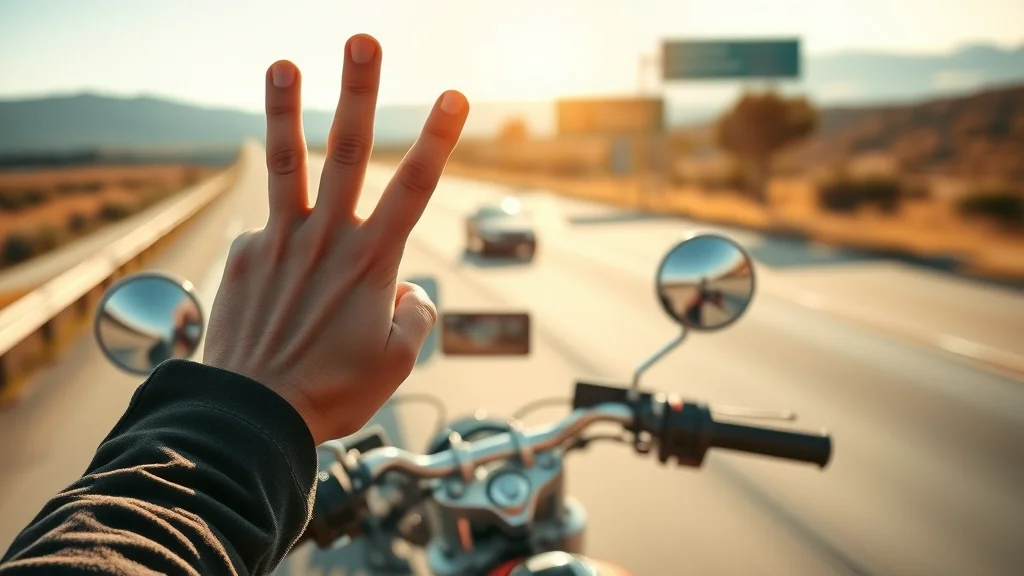
The iconic two fingers down gesture is a universal biker greeting, signaling “ride safe” and mutual respect between riders. While not a formal group riding signal, it builds camaraderie and raises awareness among group motorcycle riders and independent travelers alike. On a group ride, extending this gesture unites the entire group with other riders on the open road and serves as a reminder of the shared commitment to safety and community.
What is the 1% rule in motorcycles?
Answer: Brief history and the significance of the '1% rule' in motorcycle culture, unrelated to typical group riding safety but often misunderstood.
The “1% rule” is a reference from motorcycle culture, originating after a statement by the American Motorcyclist Association that 99% of riders are law-abiding citizens, suggesting the “1%” are outlaws. It is not related to how to prepare for group riding safety or the best practices covered in this guide. For group motorcycle rides, focus on structure, preparation, and communication—not outlaw mythos.
How to ride safely in a group?
Answer: Step-by-step strategies for group motorcycle ride safety—planning, assigning roles, mastering hand signals, and respecting formations.
Riding safely in a group starts with ride prep: know the route, assign trusted riders as lead and sweep, and review hand signals as a team. During the motorcycle ride, maintain staggered or single-file formations, adapt to traffic conditions, and always communicate changes with clear hand signals. A disciplined, mutual understanding within the group is the surest way to travel the open road together without issues.
Why do bikers tap their helmet when they see a cop?
Answer: The helmet tap as a widely used hand signal to warn other riders of police presence, enhancing overall group ride communication.
The helmet tap is a non-verbal hand signal indicating police or speed enforcement ahead. Though informal, it’s widely understood among motorcycle group riders as an act of courtesy and awareness, helping the entire group avoid surprises and reinforcing the culture of communication that’s essential for group riding safety.
Key Takeaways: How to Prepare for Group Riding Safety
- Always communicate plans and signals before the ride
- Understand and use correct formations for group safety
- Assign clear lead and sweep roles in every group ride
- Hand signals are essential for non-verbal communication
- Consistent group riding practices prevent costly mistakes
Take the Next Step for Group Riding Safety
"Safe rides are built on preparation. Don’t leave your group’s well-being to chance—ride smart, ride united."
Make every ride a safe group ride—start with thorough preparation, effective hand signals, and clear communication. The open road is best enjoyed together when everyone is ready and protected.
Group riding safety is just one piece of the puzzle for a truly rewarding motorcycle experience. If you’re looking to elevate your skills and keep your bike performing at its best year-round, explore our expert guide on seasonal bike care secrets every rider must know. You’ll discover practical maintenance strategies that go hand-in-hand with safe riding, ensuring your motorcycle is always ready for the next adventure. Take your preparation to the next level and enjoy peace of mind on every journey—because a well-cared-for bike is the foundation of every safe and memorable group ride.
For Expert Group Motorcycle Ride Prep, Call Nasty Performance Motorcycle Shop Today: 847-458-4858
Whether you need help with pre-ride inspections, want a refresher on hand signals, or are looking to organize your next motorcycle group ride with confidence, Nasty Performance Motorcycle Shop is your go-to resource. Their knowledgeable staff can assist you in all aspects of group ride safety—so don’t wait until mistakes happen, call 847-458-4858 and make your next group motorcycle adventure the safest yet!

Write A Comment