
Did you know: Skipping just one or two routine motorcycle oil change steps can cut your engine lifespan in half? If you want your rides to stay smooth, your engine to last, and your wallet to stay fuller, mastering these steps isn’t just good maintenance—it’s essential insurance. Whether you’re a first-timer or a seasoned rider, the following ultimate guide will walk you through every crucial detail to keep your motorcycle running smoothly . Stick around to discover the must-know process that separates expert mechanics from risky shortcuts.
Why Every Rider Needs Proper Motorcycle Oil Change Steps
- Did you know? Skipping routine motorcycle oil changes can reduce engine lifespan by up to 50%. Discover how mastering motorcycle oil change steps can preserve your ride and wallet.
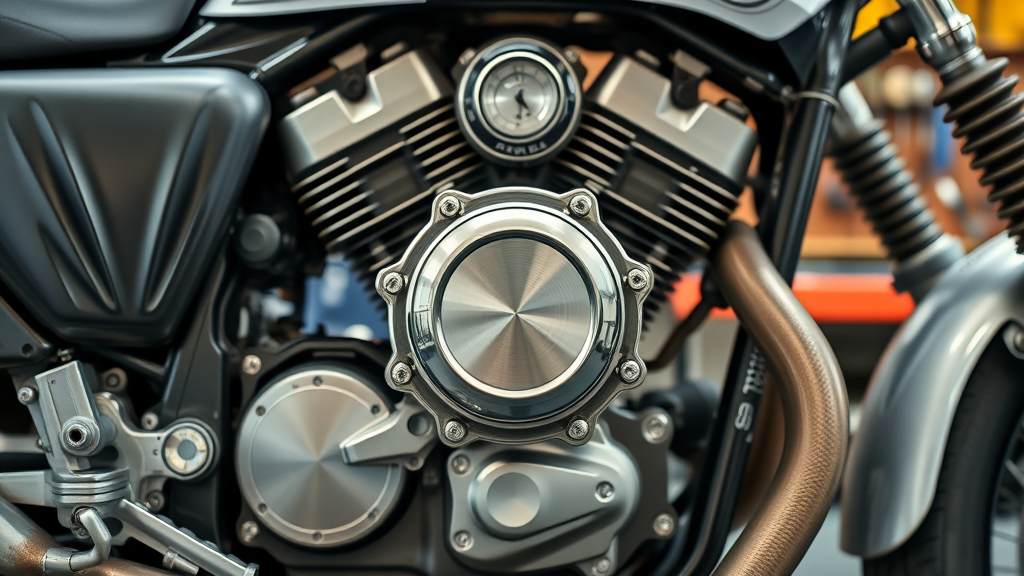
Motorcycle Oil Change Steps: Essential Preparation for Peak Performance
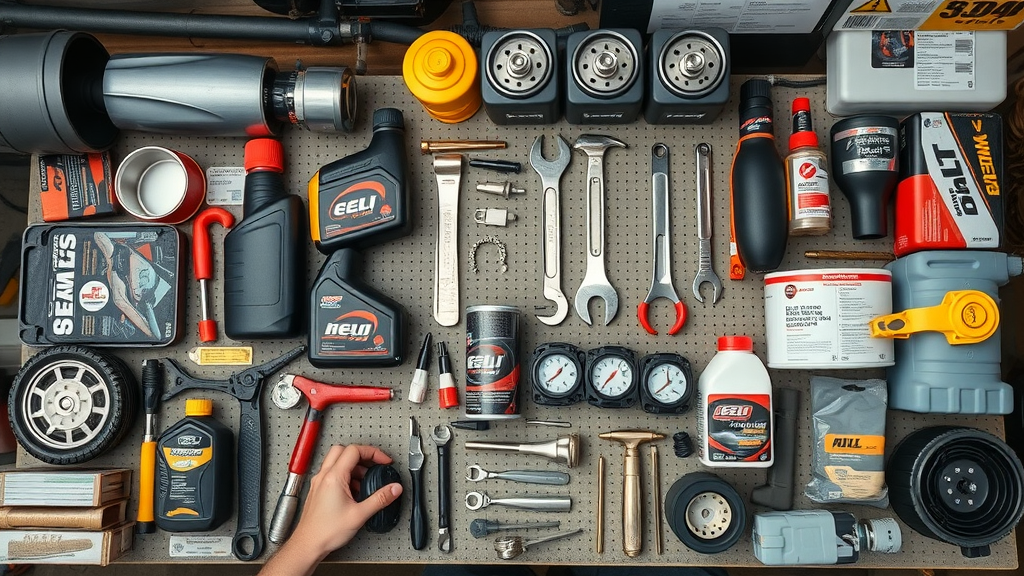
- Gather the following before diving into the motorcycle oil change process:
- Motorcycle-specific engine oil
- Best-fit oil filter
- Wrenches for drain plug and drain bolt
- Oil catch pan
- Funnel and cleaning rags
"The right preparation makes any motorcycle oil change step simple and mess-free." - Expert Mechanic
Step-by-Step Motorcycle Oil Change Steps Explained
Warm Up Engine Oil for an Effective Oil Change
- Running the engine heats the motorcycle oil, ensuring smoother draining and better removal of contaminants.
Before beginning the oil change process, always warm up your engine oil by running the motorcycle for 3-5 minutes. Warm oil flows faster, carrying away more contaminants and residue than cold oil, ensuring a more thorough clean. Heated oil also thins out, allowing it to drain completely and help you spot any debris or particles in your old engine oil. This small but essential step is the backbone of all motorcycle oil change steps , maximizing the effectiveness of each change and preserving your bike’s internal components. Skipping this can leave old oil residue inside, reducing the benefits of your efforts and potentially limiting your engine’s life span.
By allowing your motorcycle oil to circulate and reach optimal temperature, you ensure that when you remove the drain plug and let the oil out, it brings with it the contaminants that accumulate during regular riding. Many riders underestimate this simple task, but professionals swear by it as the most important first action you can take. Furthermore, this preparation matches the advice found in manufacturer manuals and elevates the oil change to a truly professional level.
Locate the Drain Plug and Position the Oil Pan
- Find your drain plug and drain bolt under the engine. Proper positioning prevents spills and accidents.
The next critical step in your motorcycle oil change is finding your oil drain plug. Typically located at the bottom of the engine case, the drain plug and drain bolt must be easily accessible and clearly visible before starting. Place your oil catch pan directly below these, making sure it's large enough to capture the entire amount of used oil. A well-placed drain pan prevents accidental spills, protecting your garage floor and the environment from messes.
When positioning the oil pan , align it under the expected oil stream’s path. Keep your tools—including a socket wrench and cleaning rags—within arm’s reach for smooth workflow. Failing to properly locate or position your drain pan can turn a simple oil change into a cleanup nightmare. To ensure a mess-free process, confirm that your motorcycle sits level and securely either on its center stand or paddock stand to allow oil to drain evenly and thoroughly.
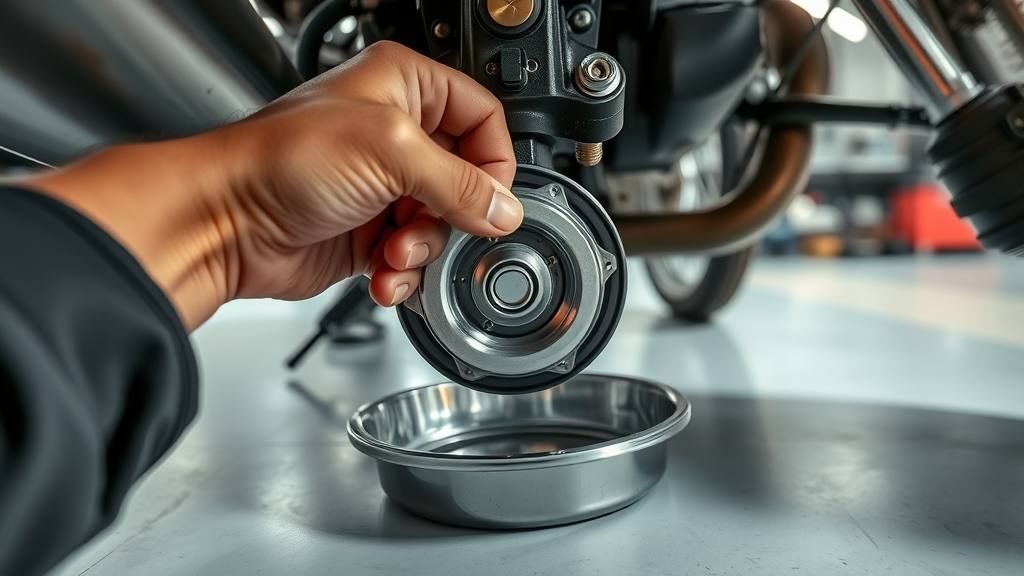
Remove the Oil Drain Bolt to Drain Old Engine Oil
- Carefully unscrew the drain plug
- Let the old motorcycle oil completely drain
- Inspect for metal particles or debris
Using your chosen wrench or socket wrench , gently loosen and then remove the oil drain bolt . As the bolt comes free, you’ll notice the old engine oil flowing steadily into the pan. Allow ample time for all of the oil to drain—rushing this step can leave residual contaminants behind. Take a moment to inspect the used oil for any unusual metal particles or debris, which may signal underlying engine wear that requires further attention.
In this step, patience is vital. Once the oil is draining , clean the drain plug and surrounding area with a rag. Look at the threads and the washer—if worn, replace for a perfect seal. Make sure all old oil is drained before moving on, as leftover dirty oil can contaminate the fresh batch, defeating the purpose of the oil change process. Once it's fully drained, set the plug aside for reinstallation.
Replace Oil Filter for Maximum Engine Oil Cleanliness
"A new oil filter during each oil change keeps your engine running cleaner and longer."
- Lubricate the fresh oil onto new filter gaskets before installation.
After the oil has drained, it’s time to replace the oil filter . Using a filter wrench if necessary, unscrew the old filter and let any residue drip into the drain pan . Before installing the new filter, apply a thin layer of fresh oil to the gasket—this ensures a tight seal and makes removal easier at the next change. Install the new filter by hand, tightening until it’s snug but not overtightened, which can damage the gasket.
Swapping in a new oil filter with every change is essential to keep the engine running at peak performance. The filter’s role is to trap contaminants that even new oil can pick up as it cycles through the engine. Reusing an old filter or skipping this step exposes your engine to increased wear and reduces the effectiveness of your motorcycle oil change steps . Proper installation of the filter directly contributes to your engine’s clean operation and long-term health.
Refill Engine Oil: Achieving the Perfect Oil Level
- Reinstall drain bolt and tighten securely
- Use funnel to pour new engine oil
- Check oil level with dipstick or inspection window
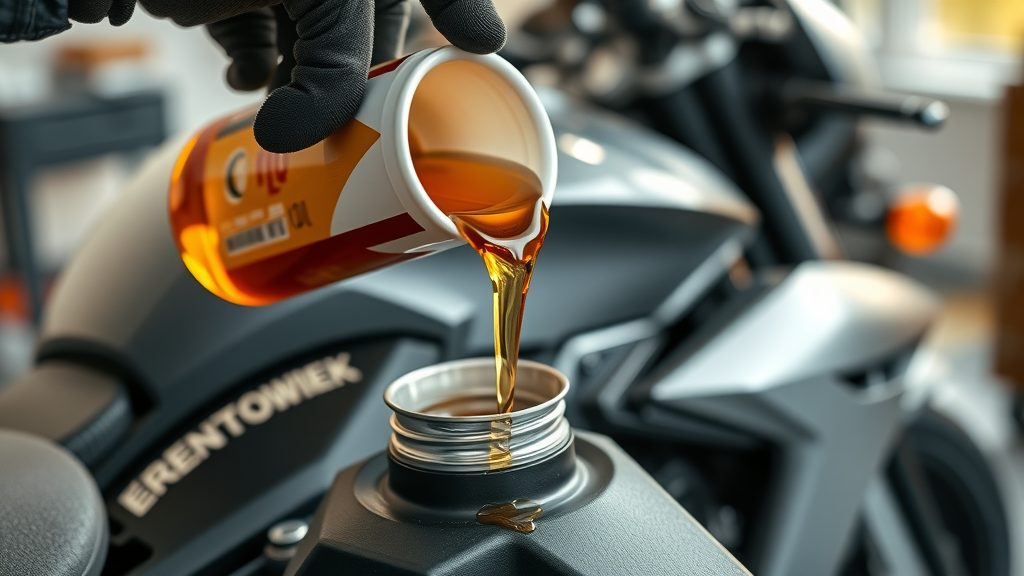
Once the old oil is out and the new filter is in place, reinstall the drain bolt using your wrench—tight but not over-torqued. Using a clean funnel, pour fresh engine oil into the oil fill port. Always use oil that matches your manufacturer’s specifications to ensure optimal engine performance and longevity. Take care not to overfill, as this can cause foaming or leaks during operation.
After the initial fill, use your dipstick or inspection window (also called a sight glass) to check the oil level . Add small amounts of oil as needed until the correct mark is reached. Accurate oil level is crucial—the right amount keeps all engine parts lubricated and running smoothly, while excess or shortage can trigger operational problems or damage. Take your time during this step for the most reliable outcome.
Start Engine and Inspect for Leaks
- Check beneath the motorcycle for leaks after starting engine. Confirm correct oil and filter installation.
With new engine oil in place, start the motorcycle and let it idle for a minute. Watch underneath for any leaks from the drain plug or the oil filter area. If leaks are present, shut off the engine immediately, allow it to cool, and double-check the tightness of both the plug and filter. This leak check is a small step that can avert major future headaches and expense.
After running the engine, check the oil level again, as oil may have circulated within the engine and dropped the visible level. Top up if necessary and be sure the sight glass or dipstick reads within the correct range. With no leaks and the correct volume, your bike is readied for safe, reliable riding—every ride, every time.
Dispose of Old Motorcycle Oil and Filter Responsibly
- Take used oil and filter to authorized disposal or recycling centers.
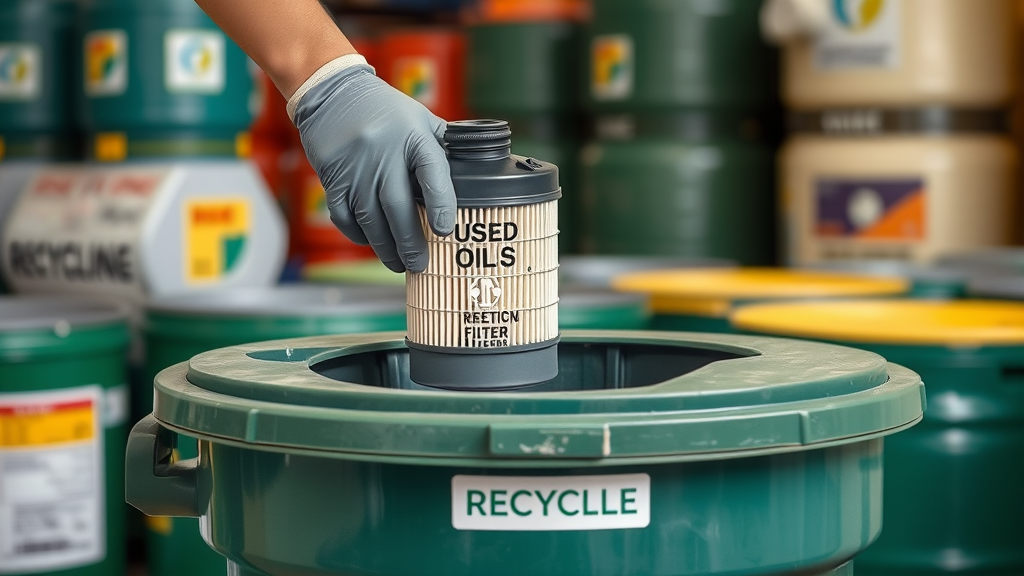
Responsible disposal is a critical finishing touch to any DIY motorcycle oil change . Never pour used oil down the drain or throw your oil filter in the regular trash. Place the used oil and filter in sealed containers and transport them to a local recycling center or authorized automotive shop. Many retailers accept used oil and filters for proper recycling.
Not only is responsible disposal important for the environment, but improper actions can result in legal penalties or contamination of natural resources. Make it a point to clean your workspace and properly dispose of rags that have absorbed oil. Adopting a thorough disposal routine is the hallmark of a conscientious motorcycle owner.
Motorcycle Oil Change Steps: Frequency and Best Practices
- Follow your manual’s recommendations for regular oil change intervals. Ambient conditions and usage may require more frequent changes.
"Consistent motorcycle oil change steps protect your bike, delivering dependability every ride."
Sticking to a regular oil change schedule is just as important as the process itself. Your owner's manual provides a recommended interval, but aggressive riding, frequent short trips, or exposure to dusty environments may require you to change the oil even more often. Engine oil breaks down over time, losing lubricating and protective properties, which can cause increased wear and reduced performance.
Always document your oil changes, and note the type of motor oil and filter used. This routine not only preserves the engine but can also boost resale value. If in doubt, err on the side of caution—a regular oil change is cheap insurance compared to the cost of major engine repairs.
| Step | Correct Action | Common Mistake |
|---|---|---|
| Warm engine | Heat oil for better drainage | Skip warmup; leaves residue |
| Remove drain plug | Place pan, loosen carefully | Forget to use catch pan |
| Replace oil filter | Lubricate gasket, hand-tighten | Over-tighten or reuse filter |
| Refill with new oil | Check level, use proper grade | Under/overfill |

Quick Checklist: Motorcycle Oil Change Steps at a Glance
- Warm up engine
- Remove drain bolt and plug
- Drain old engine oil
- Swap in new oil filter
- Reinstall drain bolt
- Add new motorcycle oil
- Check oil level
- Test run and inspect for leaks
- Properly dispose of old oil and filter
How to change oil on a motorcycle step by step?
- Begin with a warm engine, position an oil pan under the drain plug, remove the drain bolt to release old engine oil, change the oil filter, reinstall drain bolt, add fresh motorcycle oil, start and inspect for leaks, and dispose of used oil responsibly for a complete process.
Changing motorcycle oil is a straightforward sequence. First, warm up the engine so the motor oil flows freely. Place your drain pan beneath the drain plug , and then remove the drain bolt to let out all the used engine oil. Swap out the old oil filter for a new one—don’t forget to lubricate the gasket with fresh oil for an effective seal.
Next, reinstall the drain plug and fill the engine with motorcycle-specific oil, using a funnel to avoid spills. Check the oil level using a sight glass or dipstick. Run the engine briefly to circulate the new oil, then perform a final inspection for leaks. Dispose of the old oil and filter at a reputable recycling point for a job well done!
What are the 5 steps to an oil change?
- 1. Warm the engine.
2. Remove drain plug and drain oil.
3. Replace oil filter.
4. Reinstall drain plug and fill new engine oil.
5. Check oil level and run engine for leaks.
The five essentials for a successful oil change are: Warm the engine for better oil flow. Remove the drain plug and allow oil to completely drain . Always swap the oil filter for optimal engine cleanliness. Securely reinstall the drain bolt and fill the crankcase with the right motorcycle oil , ensuring correct oil grade.
Check the oil level after the engine runs, then do a leak inspection. This routine is the standard for DIY and professional mechanics alike, guaranteeing that every drop of engine oil counts toward the long-term reliability and smooth operation of your ride.
What's needed for a motorcycle oil change?
- Motorcycle-specific engine oil, new oil filter, wrenches for drain plug, an oil catch pan, funnel, and cleaning rags.
Gather all necessary items before starting your motorcycle oil change steps to make the process smooth and efficient. Your list should always include motorcycle-specific engine oil , as using the correct type is essential for engine protection. Also, obtain a new oil filter , a filter wrench (if needed), a drain pan for collecting old oil, and wrenches or sockets sized for your drain plug and drain bolt .
Don’t forget a funnel to avoid spills, as well as cleaning rags to wipe excess oil or clean up stray drops. Having everything close at hand minimizes errors and keeps your workspace organized—practices that define responsible and effective bike maintenance.
Can you change motorcycle oil by yourself?
- Yes. With basic tools, quality oil, and a step-by-step guide, any owner can perform a safe and efficient motorcycle oil change.
Absolutely—most motorcyclists can change motorcycle oil at home with minimal expense. All you need is a reliable step-by-step guide, some fundamental tools, and a bit of confidence in your wrench skills. By doing it yourself, you gain hands-on experience and control over the products used, helping your bike run longer between service appointments.
Many seasoned riders recommend self-maintenance, as it's both empowering and cost-saving. Plus, you learn to spot potential issues, like leaks or unusual residue, that could require professional attention. So go ahead: roll up your sleeves and take ownership of your motorcycle’s engine health.
Top FAQs on Motorcycle Oil Change Steps
- How often should I perform motorcycle oil change steps for my bike?
- Can I use car oil instead of motorcycle oil for an oil change?
- What type of oil filter is best for my model?
- Are synthetic engine oils better for motorcycles?
- What happens if I skip a regular oil change?
Q:
How often should I perform motorcycle oil change steps?
A: Most manufacturers recommend changing motorcycle oil every 3,000-5,000 miles or every six months, whichever comes first. If you ride in harsh conditions or use your bike frequently, more regular oil changes are advised.
Q:
Can I use car oil for a motorcycle oil change?
A: No. Use oil formulated specifically for motorcycles. Car oil may lack the additives motorcycles require and can lead to clutch slippage or inadequate engine protection.
Q:
What oil filter is best for my model?
A: Always use OEM (Original Equipment Manufacturer) or high-quality aftermarket filters that match your unit’s model specifications for a secure fit and optimal performance.
Q:
Are synthetic oils better for motorcycles?
A: Synthetic oils often provide improved performance at extreme temperatures and longer intervals between changes. Always check your owner’s manual for compatible oil types before switching.
Q:
What happens if I skip a regular oil change?
A: Forgoing oil changes increases the risk of engine wear, overheating, and mechanical failure. Always stick to regular oil change intervals.
Pro Advice: Key Takeaways for Effective Motorcycle Oil Change Steps
- Always use motorcycle-specific oil and filters
- Warm the engine before draining oil
- Replace the oil filter every oil change
- Check for leaks after refilling
- Stick to regular maintenance to maximize engine life
"Meticulous motorcycle oil change steps today prevent costly engine repairs tomorrow." - Veteran Rider
Contact the Experts for Motorcycle Oil Change Steps Assistance
- Looking for help with your motorcycle oil change steps? Call Us Today: 847-458-4858 for professional advice or service.
Still have questions or need expert help performing your next oil change? Call Us Today: 847-458-4858 and let our experienced technicians guide you to a longer, smoother motorcycle engine life!
Actionable Step:
To further enhance your understanding of motorcycle oil change procedures, consider exploring these authoritative resources:
This comprehensive guide from Harley-Davidson® Insurance provides detailed instructions on each step of the oil change process, emphasizing the importance of proper preparation and execution to maintain engine health.
AMSOIL’s blog offers a clear, nine-step procedure for changing motorcycle oil, including tips on selecting the right oil and filter, ensuring a thorough and effective maintenance routine.
By consulting these resources, you’ll gain valuable insights and practical tips to perform oil changes confidently, ensuring your motorcycle’s engine operates at its best.




Write A Comment